
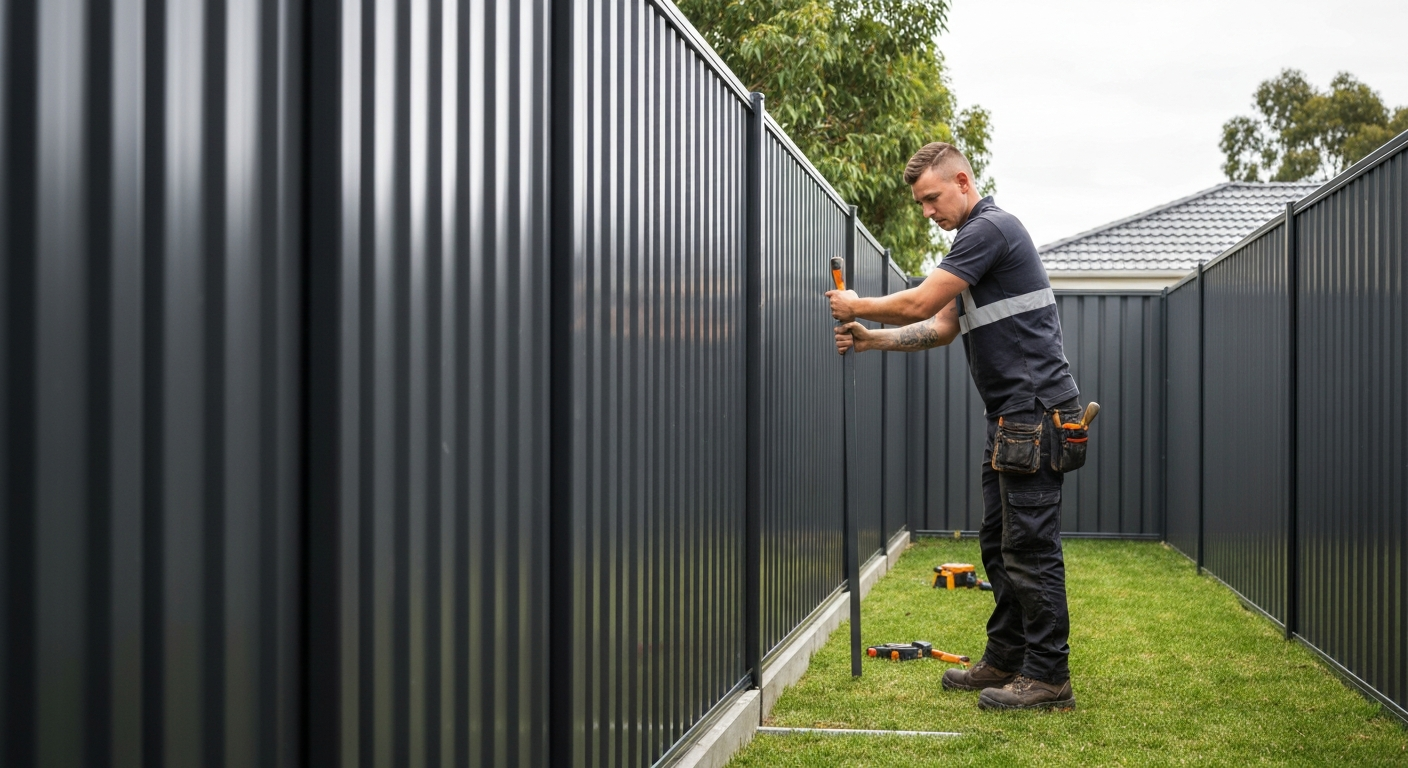
Utilizing Stress vs. Tension-Free for Chain Web Link Fences
A chain link fence looks straightforward up until you're the one explaining, with invoices, why it's beginning to sag after the initial season. I have actually stood on both sides of that discussion, initially as the fencing contractor attempting to deliver a tidy install, and later on as the person the fencing proprietor calls when the "it'll tighten up" promise turns into a weekend break project.
The big choice is generally stress versus tension-free. Theoretically, it seems like a little information. In the area, it alters whatever concerning how the fencing acts under wind, exactly how it takes care of line blog posts and leading rails, and just how much time you end up investing on adjustments instead of installing.
Let's talk with it like it's your fencing, your cash, and your reputation.
What "tension" truly implies in chain link
When individuals state "tension," they're generally speaking about how the fabric is tensioned at the ends and safeguarded through the line of articles. Most tensioned setups make use of a stress bar or a tensioning system at the corner blog posts or finish messages, pulling the chain web link textile limited before affixing it along the run.
That tension issues since chain link is not a rigid material. The fabric stretches and kicks back. Also if it really feels tight on the first day, it will reply to weather. Heat increases the steel, cold can diminish it, wind flexes it, and gravity does its job with years, not days.
A tensioned fence beginnings with the material under a regulated stretch. That gives you an extra secure standard. You get much less of the "wavy" look and you decrease the chance that the fence will certainly look loose right after installation.
A tension-free setup, often called a slack or non-tensioned approach, concentrates a lot more on establishing blog posts properly, running the material, and securing it without pre-stressing the material. It's not that the textile has no slack. It's that the system is created to count on the article line, brackets, and overall layout as opposed to drawing the material limited at the start.
That distinction appears technical. It is, yet it also shows up visually within months.
The sincere compromise: tight now versus tight later
Here's the unpleasant fact: neither stress neither tension-free is instantly "much better." Each approach is an approach for managing movement.
Tensioned fencings: the typical benefits
Tension aids you regulate the preliminary appearance and lower very early sag. When the textile is drawn limited and protected at the ends, the fencing often tends to maintain a straighter profile. That matters if you're trying to offer a clean aim to neighbors, residential or commercial property managers, or a fencing company's customers who appreciate aesthetic appeal.
Tensioned systems also often tend to handle wind loads more predictably, as long as the articles are sized and spaced properly. A chain link fence is basically an adaptable screen, and tension makes it extra resistant to that "flap" effect.
In functional terms, I've seen tensioned fencings remain looking great through seasonal temperature swings, where tension-free fencings can begin showing visible slack earlier. That difference is particularly obvious on longer runs with regular textile coverage.
Tension-free fencings: why individuals pick it
Tension-free is usually selected for price control, rate, or specific site problems. If you have small quality difficulties, complicated angles, or you desire a less complex setup that reduces the moment spent tensioning, a non-tensioned technique can be appealing.
There's likewise a truth some property owners don't say aloud: they do not want a fence that looks "tight like a drum" right after set up, due to the fact that they understand the material will certainly relocate. A tension-free approach can look more forgiving as it unwinds, though it can still sag.
If the fencing line is brief, post spacing is limited, and the material is properly attached along the way, tension-free can work well. The trick is not treating it like tensioned work without the tension. The system still requires to be crafted, just differently.
Wind, quality, and post format: the genuine drivers
Tension is only one item. The larger motorists are what's happening to the posts and exactly how the fencing is secured and braced.
Wind tons don't care exactly how tight you made it
Wind bends the textile and loads the posts. On a strong fence, that flex is handled. If messages are under-sized, spaced as well much apart, or not appropriately supported at ends, the fencing will move whether the textile was tensioned or not.
I remember one mount where the stress looked fantastic on pickup day. The first solid wind came via and the fencing line had an obvious wave. It wasn't a "tension failing." The supporting at the end messages wanted for the website direct exposure. We restored the terminal structure and the trouble reduced considerably. The textile tension was never the whole story.
Grade modifications punish careless geometry
If your fence line complies with uneven grade, the textile needs to change in between heights. With stress, you're asking the textile to pull right into positioning. If the articles aren't set to create a consistent framework, tension can enhance aesthetic issues due to the fact that the fabric wishes to be straight while the blog posts require it to bend.
Tension-free installments can sometimes mask minor variances, yet they don't eliminate them. Eventually, the slack becomes a style of movement, not just a temporary adjustment.
Corner and end settings up matter most
If you're going to buy stress, you need solid end blog posts, corners, and bracing. Those terminal points are where tension converts into force. Weak edge frameworks will certainly bow or move. After that the fencing loses the advantage of being pulled limited in the very first place.
A fencing owner might assume "the textile sagged," yet the source could be incurable setting up activity. That's why stress decisions need to begin at the ends, not in the middle run.
How it evaluates time: what proprietors really notice
People notice three things: droop, waviness, and elevation variation.
A tensioned fencing usually reveals waviness later, due to the fact that it begins tighter and kicks back progressively. Height variant can still occur if line articles are not secure or if the incurable structures move.
A tension-free fence can look acceptable early, after that reveal slack faster. The textile can begin drooping in between articles, and the leading side can create a mild contour that becomes more noticeable as the period cycles.
It's additionally worth mentioning the top rail (if installed) and just how it's anchored. A top rail can create a noticeable straight line even if the textile is not flawlessly tensioned, however it depends upon how it's attached and aligned. If the leading rail is somewhat off, tension can pull the material right into positioning and make the rail look "even worse" from a distance. I have actually found out to examine the rail course before choosing how hostile to be.
Cost and labor: tension is time, yet tension-free can be time too
On a typical task, tensioned installation consists of extra labor steps. You're measuring, tensioning, safeguarding the textile at terminals, and after that proceeding attachments along the run.
But tension-free isn't automatically much faster in the real world. If tension-free bring about extra corrections since the fence doesn't sit the means the customer anticipates, you can lose time later. Additionally, installers still need to preserve constant material elevation and effectively secure it. The labor shifts rather than disappears.
When I'm suggesting a fencing contractor or a fencing company team on approach choice, I look at the overall job outcome, not simply the mins spent pulling textile. The far better question is: which method aligns with the site problems and completion goal?
When tensioned fencing is the better call
Tensioned installs often make sense when you desire a crisp, uniform appearance and you have the terminal structures and post design to support it. That's particularly real in open areas where wind corresponds and the fencing line is long enough to reveal movement.
In my experience, tensioned fence often tends to execute well when:
- you have longer straight runs with less interruptions
- the fencing is revealed to wind
- the customer anticipates a limited, tidy top side visually
- you're using appropriately sized bracing at corners and ends
- post spacing is suitable for the material and height
Even then, tension doesn't forgive poor article placement. If blog posts are set unevenly or terminal frameworks are weak, the tension system simply moves the tension to where it can not be resisted.
When tension-free can function better
Tension-free can be a solid option in details scenarios. It's not a faster way for negative layout, yet it can be the ideal fit when you want less mechanical stress and anxiety in the textile and you expect activity to take place gradually and acceptably.
A tension-free method usually works better when:
- the fencing line is shorter or has constant message stabilization
- the site has quality and alignment complications where perfect tension alignment would look forced
- you're managing locations where access or format makes tensioning difficult
- the client favors a fencing that relaxes without significant aesthetic tension effects
- the style incorporates excellent rail support and regular attachment points
The important information is securing. A tension-free fence still requires strong attachment factors so the textile does not "float" between posts. If you connect loosely, slack becomes sag quicker than you 'd expect.
The covert variable: material type and how it behaves
Not all chain web link material acts the same. Larger scale material, various mesh sizes, and differing layers all alter just how the textile stretches and how it holds up over time.
I will not make believe there's an universal regulation like "constantly stress 2 inches." What issues is compatibility in between:
- fabric weight and stiffness
- how high the fence is
- post spacing and article strength
- terminal bracing capability
If a fencing is too light for the exposure or too tall for the terminal assistance, you can stress it and still wind up with a fence that doesn't stay real. Conversely, tension-free can work with lighter fabric if the system is developed to decrease slack accumulation.
A practical decision framework I utilize onsite
When I'm standing at a fence line with a team, I'm not determining based upon preference. I'm making a decision based upon risk.
Here's how I think about it when contrasting tension versus tension-free for chain link fences.
Quick on-site check prior to picking a method
- Look at terminal messages, edges, and bracing capacity, not simply line blog posts
- Measure article spacing against the fencing height and expected wind exposure
- Check quality changes, particularly where the fence line climbs or goes down
- Inspect the leading rail strategy, if one is made use of, for positioning and strength
- Talk to the customer concerning acceptable look changes gradually
That's the sensible part. When you have those solutions, the choice ends up being apparent regularly than you would certainly think.
Installation details that make or break either approach
People love to argue about stress because it seems like the determining aspect. In reality, the details you apply around stress control matter more.
Attach factors and stress distribution
If you tension the fabric yet don't attach it appropriately along the line, the material will certainly still work itself loosened or resolve erratically. If you don't tension it yet your add-ons are inconsistent, slack will certainly collect in the very same vulnerable points every time.
The objective is also fill distribution. That implies the fabric is supported along the route, not simply pulled at the ends.
Terminal alignment and bracing
An incurable structure that leans also a little will relocate the entire system. Once it moves, stress can not hold the fabric in a straight line. The right strategy is to repair incurable placement and supporting first.
If you're running a secure fencing project for a homeowner, you're also securing your company. A fencing company that reduces corners on incurable toughness frequently spends for it later on in labor telephone calls, which are expensive and rarely scheduled at practical times.
Corner habits is not a "collection and neglect" situation
Corners focus tension. Whether you use stress or otherwise, edges need thoughtful construction. With tension, corner blog posts must stand up to the pulling forces. Without tension, corners can still change because of wind and the fence's capability to "locate slack."
This is where experience issues. It's also where a good fencing contractor makes depend on, since they're not just setting up textile, they're constructing a system that stays stable through genuine weather.
Common mistakes I've seen
If you have actually ever before acquired somebody else's job, you have actually most likely seen patterns. Tension-related troubles frequently stem from the installer attempting to require a weak system to behave like a strong one. Tension-free troubles frequently come from under-attaching material and thinking slack will remain where it starts.
Here are the mistakes I see usually, no matter method:
What to prevent on your following chain web link project
- Tensioning without adequate end or corner supporting
- Setting posts too much apart for the fencing elevation and exposure
- Treating grade changes like they don't impact textile alignment
- Over-relying on appearance at set up day rather than stability over periods
- Using inconsistent accessory methods along the fence run
These concerns appear whether you're working for a fence company that wants the task to look wonderful quick, or for a fencing contractor who intends to maintain labor limited and carry on to the next website. The fencing does not respect the schedule.
Edge cases that alter the answer
Sometimes the "right" technique comes to be a compromise.
Sloped runs with long distances between posts
On an incline, stress can make the fence look directly while the blog posts require the geometry to fight. In these situations, I'm more careful with exactly how stress is used and exactly how line blog posts are set. Tension-free can in some cases prevent producing an aesthetic problem between textile straightness and blog post height changes, but only if the accessories are solid and consistent.
Wind corridors
If the fencing beings in a wind corridor, slack can end up being pumping motion, and pumping creates quicker use. Below, tensioned systems frequently win, but just when incurable settings up and article spacing are crafted for that exposure.
Properties with regular upkeep access
If your client anticipates to change the fencing later on, a tension-free method can be appropriate. It may not look identical at year 2 compared to year one, yet it can be much easier to deal with. If the customer wants very little treatment, tensioned techniques plus strong building generally have the edge.
So which one ought to you choose?
Here's the candid answer: choose the approach that matches the strength of your structure and the expectations of the owner.
Tensioned chain link fences have a tendency to deliver much better very early look and an extra controlled settling, particularly on exposed sites and longer runs, if the terminal assemblies and blog post layout depend on the work. Tension-free wire mesh fence can be completely acceptable when the website conditions and message structure sustain the fabric, and when the owner recognizes that slack can establish quicker for a calmer, less mechanically worried look.
If you're taking care of a fencing task, it's much less about picking a side and more regarding aligning three points: post strength, terminal supporting, and fabric attachment quality.
Real-world takeaway from the field
The finest fences I have actually seen are not the ones with the most "tight" view the first day. They're the ones that keep their form after weather condition, after a period of temperature level adjustment, and after somebody bumps the fence with a car or a mower because crashes happen.
When I'm collaborating with fencing contractors and fencing company groups, I press the very same message: stress is a tool, not an assurance. A tension-free develop isn't instantly inferior, and a tensioned develop isn't immediately superior. The system wins.
Pick stress when the job problems support it, and you want an uniform surface. Choose tension-free when the website and design require it, and you can keep constant support along the run. Regardless, build it like it will certainly be there when the weather condition stops being polite.
And if you ever obtain stuck, keep in mind the most basic rule that keeps returning from years on work websites: start with the ends, regard the articles, and treat the textile as something that will relocate, since it will.