20th and 21st Century Music: Technology, Innovation, and Global Sound
Posted by on
The 20th and 21st centuries revolutionized how music is created, distributed, and experienced. In the 19th century, sheet music allowed middle- and upper-class households to perform music at home, but access was limited by literacy and instrument ownership. The 20th century transformed this landscape with radio broadcasting, gramophone records, and phonographs, making music widely available to the public. Suddenly, people of all socioeconomic backgrounds could hear operas, symphonies, and popular music in their homes, and musical styles from different regions or countries became more accessible than ever.
Art music of the 20th century was defined by experimentation with rhythm, style, and sound. The trauma of World War I inspired darker, more expressive compositions, while jazz and folk traditions influenced classical composers. Innovators such as Igor Stravinsky, Arnold Schoenberg, and John Cage expanded musical boundaries. The advent of sound recording and editing gave rise to electronic subgenres like acousmatic music and musique concrète, changing how composers approached composition. Multitrack recording further revolutionized music production, allowing layers of instruments and vocals to create sounds impossible in live performance.
Jazz emerged as a defining genre, originating in African American communities in the Southern United States. Drawing from African rhythms and European harmonies, jazz emphasized improvisation, polyrhythms, syncopation, and the distinctive “blue note.” By the mid-20th century, rock music evolved from rock and roll, blues, rockabilly, and country, using electric guitars, rhythm sections, and sometimes keyboards or harmonicas. Its hallmark features included strong backbeats, catchy melodies, and a focus on three-chord structures.
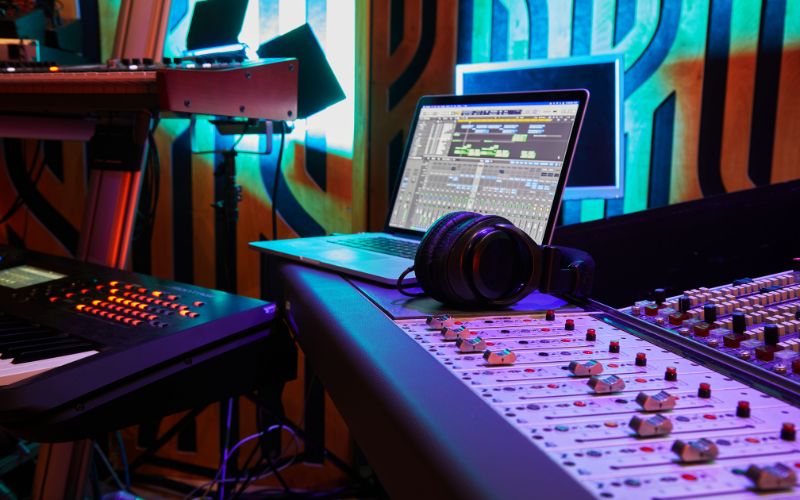
Technological innovations continued to reshape music in the late 20th and 21st centuries. The 1980s saw the rise of digital synthesizers and electronic drum machines. By the 1990s, digital audio workstations, computerized instruments, and software allowed artists to manipulate sound in new ways. DJs became integral to some bands, blending recorded music live and creating entirely new compositions. In the 2020s, bedroom producers can craft complex electronic music entirely from software, using sampled and digital instruments, reflecting the democratization of music creation.
These centuries showcase the merging of technology, innovation, and cultural exchange, transforming music into a global, highly accessible art form that continues to evolve with each generation.