3D Laser Scanning for Toronto Restoration Projects: Accurate Measurements for Success
Enhance Renovation Success with 3D Scanning in Toronto .
As a person that has operated in the 3D scanning sector for some time, I have actually seen firsthand just how technology has actually revolutionized the method we come close to building and construction and remodelling projects. One of one of the most powerful devices readily available today is 3D laser scanning, which has confirmed to be a game-changer for specialists in Toronto who are associated with renovation projects. Whether it's residential, commercial, or industrial rooms, the precision, rate, and effectiveness of 3D laser scanning make it a vital part of the remodelling process. In this post, I'm going to share my experiences and understandings on exactly how 3D laser scanning improves renovation projects in Toronto, making certain specific dimensions and inevitably bring about more effective results.
What is 3D Laser Scanning?
Prior to diving right into the particular advantages of 3D laser scanning for renovations, it's vital to recognize what the innovation entails. 3D laser scanning is a process that catches in-depth, high-precision dimensions of physical rooms utilizing laser light to create precise digital depictions. The scanner produces laser beam of lights that bounce off surfaces and return to the scanner, computing the distance to every factor. By doing this at hundreds of factors per 2nd, the scanner creates a factor cloud-- a thick, three-dimensional collection of data factors that create a extremely accurate electronic design of the area.
This information can be converted into a range of layouts, consisting of CAD (Computer-Aided Design) data, which are invaluable for architects, designers, developers, and service providers dealing with remodelling tasks. With this innovation, specialists can see every information of a building or space-- down to millimeters-- prior to any type of work begins.
The Importance of Accurate Measurements in Restoration Projects
On the planet of renovation, precision is everything. A solitary mistake or neglected dimension can result in expensive errors, delays, and also structural problems. For tasks in Toronto, a city known for its aging infrastructure, varied architectural styles, and complicated building ordinance, accuracy comes to be much more critical. Remodellings frequently include collaborating with existing structures, which can provide hidden challenges such as unequal floors, outdated circuitry, and changing foundations. As a result, it's important that the dimensions taken previously and throughout the task are exact to avoid costly reworks or conformity problems.
Standard dimension approaches, like measuring tape or hands-on surveying, are still utilized by some, yet these approaches are prone to human error. As someone who has directly worked with a number of remodelling tasks, I can testify that the slightest error can snowball into larger troubles down the line. That's where 3D laser scanning shines-- by supplying highly thorough and precise data, it makes sure that all measurements are reliable and exact, from the very beginning to the roof covering.
Advantages of 3D Laser Scanning for Toronto Renovations
Now, let's check out the particular advantages that 3D laser scanning brings to improvement tasks in Toronto.
1. Boosted Precision
One of the most significant advantages of 3D laser scanning is the degree of accuracy it uses. In improvement projects, having an precise electronic version of the existing area assists specialists prevent the mistakes that come with manual measurements. The laser scanner catches measurements with severe precision-- frequently to within millimeters-- and creates a digital model that properly represents the physical space. This level of information is important for making improvements that fit effortlessly within the existing structure.
For example, during a current improvement task in downtown Toronto, we made use of 3D laser scanning to catch the inside of a 100-year-old building that was being repurposed for modern-day office space. The structure had cleared up over time, causing shifts in the positioning of walls, floors, and home windows. With standard dimension methods, it would certainly have been challenging to account for these subtle modifications. Nonetheless, with 3D scanning, we were able to get a comprehensive electronic design that helped us create brand-new aspects to fit exactly within the existing structure.
2. Speed and Efficiency
In Toronto, improvement timelines are commonly tight due to various factors, including city licenses, weather, and the needs of customers. Standard measuring and evaluating approaches can be lengthy, particularly for big or complicated spaces. This is where 3D laser scanning actually shows its well worth.
A laser scan can cover huge areas promptly, catching measurements from multiple angles in a fraction of the moment it would certainly take with manual dimensions. For instance, in a recent industrial improvement job, we were entrusted with evaluating the entire flooring of a multi-story office building in a hectic location of Toronto. Instead of costs days walking through the area with a measuring tape and marking off dimensions by hand, we completed the check in just a couple of hours. This permitted our group to focus on the next phases of the job, conserving both time and money.
3. Boosted Cooperation and Visualization
Among the vital difficulties in improvement jobs is communication. With a lot of stakeholders involved-- from designers and service providers to designers and interior developers-- it's vital that every person is on the exact same page. 3D laser scanning helps facilitate this by offering a comprehensive, shareable digital model that can be accessed by everyone involved in the task.
As soon as the scan is full, the factor cloud information can be exchanged 3D designs that are simple to manipulate and visualize. This assists every person involved in the project acquire a better understanding of the space and permits them to check out various design options before committing to any type of adjustments. In Toronto, where layout trends are continually evolving and sustainability is a major factor to consider, having this degree of partnership is vital.
For instance, throughout a remodelling task for a premium condo in Toronto's Distillery Area, the client intended to preserve the building's historical beauty while introducing modern features. Using the 3D check, our group had the ability to envision exactly how various aspects of the remodelling would certainly communicate with the existing structure. We can ensure that new wall surfaces, home windows, and flooring would certainly complement the original attributes, causing a style that perfectly mixed old and new.
4. Improved Danger Administration
In any improvement task, there are integral threats, especially when collaborating with older buildings. Architectural problems, hidden pipes, out-of-date electric systems, and environmental elements such as mold or asbestos can be uncovered as work advances. Typical techniques of determining and evaluating usually miss out on these issues till building and construction starts. With 3D laser scanning, you can identify possible threats early while doing so.
For example, in among our recent Toronto jobs, we were refurbishing an old warehouse into loft apartments. During the scanning procedure, we discovered that the original structures had been endangered in certain locations, something that would have been tough to spot through typical techniques. By identifying these issues prior to beginning any kind of major work, we were able to prepare for the essential architectural supports, making certain that the job moved on without major hold-ups or unforeseen prices.
5. Cost Cost savings
Although 3D laser scanning does come with an initial financial investment, the long-term cost savings it provides make it a worthwhile option for lots of restoration jobs. The precision and performance it brings to the table help in reducing the possibility of errors, adjustment orders, and expensive rework. In addition, the time conserved throughout the measuring process enables teams to start job quicker, decreasing job timelines and lessening labor prices.
As an example, in a renovation job for a store hotel in Toronto, we utilized 3D scanning to gauge the hotel's existing entrance hall, which had been integrated in a one-of-a-kind design with irregular flooring patterns. With the 3D check, we had the ability to generate a extremely accurate design of the room, which permitted us to create a customized style that fit perfectly with the existing layout. This conserved the customer cash by avoiding pricey redesigns or alterations during building.
6. Compliance with Building Ordinance
Toronto has strict building regulations and guidelines that have to be adhered to when renovating both property and industrial spaces. Making sure that a improvement satisfies these codes is crucial to preventing fines and hold-ups. By using 3D laser scanning, experts can guarantee that every facet of the improvement is made with conformity in mind.
The digital versions created from the laser scans can be contrasted versus the city's building regulations to guarantee that brand-new designs meet the needed structural, security, and availability criteria. With 3D scanning, there's no uncertainty included, which makes it simpler to stick to the needs stated by the City of Toronto.
Verdict
3D laser scanning is certainly among one of the most powerful devices offered for restoration projects in Toronto. Its ability to offer very accurate measurements, boost effectiveness, and enhance collaboration has made it an invaluable resource for architects, designers, and service providers working in this vibrant, fast-paced city. Whether you're remodeling a historic structure, upgrading a business area, or working on a domestic task, 3D laser scanning can aid guarantee that your project is completed with accuracy, on schedule, and within budget. In an market where accuracy is whatever, embracing this innovation is the key to making sure success.
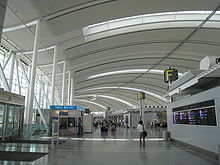
Interior of Toronto Pearson International Airport's Terminal 1. Toronto Pearson serves as the international airport for the Greater Toronto Area.
Canada's busiest airport, Toronto Pearson International Airport (IATA: YYZ), straddles the city's western boundary with the suburban city of Mississauga. The Union Pearson Express (UP Express) train service provides a direct link between Pearson International and Union Station. It began carrying passengers in June 2015.[311][312]
Limited commercial and passenger service to nearby destinations in Canada and the United States is offered from the Billy Bishop Toronto City Airport (IATA: YTZ) on the Toronto Islands, southwest of downtown. Buttonville Municipal Airport (IATA: YKZ) in Markham provides general aviation facilities. Downsview Airport (IATA: YZD), near the city's north end, is owned by de Havilland Canada and serves the Bombardier Aviation aircraft factory.
Within a few hours' drive, Hamilton's John C. Munro International Airport (IATA: YHM) and Buffalo's Buffalo Niagara International Airport (IATA: BUF) serve as alternate airports for the Toronto area in addition to serving their respective cities. A secondary international airport, to be located north-east of Toronto in Pickering, has been planned by the Government of Canada.
If you're interested in the history of shoes, visit the Bata Shoe Museum. Shoes are much more interesting that you might think, not only in terms of fashion but also culture. Special exhibits include In Bloom: Flowers and Footwear and Obsessed: How Shoes Became Objects of Desire.
It is located just across from the Royal Ontario Museum. You can gain access to the museum for just $14 CAD.
TIP: Check out the outside of the building as well. The building is shaped like a shoebox.
Lidar (, additionally LIDAR, LiDAR or LADAR, an acronym of "light detection and ranging" or "laser imaging, detection, and varying") is a technique for determining ranges by targeting a things or a surface with a laser and gauging the moment for the mirrored light to go back to the receiver. Lidar may run in a fixed direction (e. g., vertical) or it might scan numerous instructions, in which case it is referred to as lidar scanning or 3D laser scanning, a special combination of 3-D scanning and laser scanning. Lidar has terrestrial, airborne, and mobile applications. Lidar is commonly utilized to make high-resolution maps, with applications in checking, geodesy, geomatics, archaeology, geography, geology, geomorphology, seismology, forestry, climatic physics, laser assistance, airborne laser swathe mapping (ALSM), and laser altimetry. It is utilized to make electronic 3-D depictions of areas on the Earth's surface area and ocean bottom of the intertidal and near seaside area by differing the wavelength of light. It has actually additionally been significantly made use of in control and navigation for self-governing vehicles and for the helicopter Ingenuity on its record-setting trips over the surface of Mars. The advancement of quantum modern technology has triggered the emergence of Quantum Lidar, showing greater performance and level of sensitivity when contrasted to conventional lidar systems.
.3D scanning is the process of evaluating a real-world object or setting to collect three dimensional data of its shape and possibly its appearance (e. g. shade). The gathered information can then be made use of to create electronic 3D designs. A 3D scanner can be based upon many different technologies, each with its own constraints, advantages and prices. Lots of constraints in the kind of objects that can be digitised are still present. For instance, optical modern technology might encounter many difficulties with dark, glossy, reflective or clear items. For example, industrial computed tomography scanning, structured-light 3D scanners, LiDAR and Time Of Trip 3D Scanners can be utilized to build digital 3D versions, without destructive testing. Collected 3D information is useful for a wide variety of applications. These gadgets are utilized extensively by the show business in the manufacturing of movies and computer game, consisting of digital reality. Other typical applications of this technology consist of increased fact, motion capture, gesture acknowledgment, robotic mapping, industrial style, orthotics and prosthetics, reverse design and prototyping, high quality control/inspection and the digitization of cultural artefacts.
.Toronto is the most heavily populated city in Canada and the resources city of the Canadian province of Ontario. With a population of 2,794,356 in 2021, it is the fourth-most populous city in North America. The city is the anchor of the Golden Horseshoe, a metropolitan cluster of 9,765,188 people (as of 2021) surrounding the western end of Lake Ontario, while the Greater Toronto Area proper had a 2021 population of 6,712,341. Toronto is an international centre of service, money, arts, sporting activities, and culture and is one of the most multicultural and worldwide cities on the planet. Aboriginal peoples have actually travelled with and populated the Toronto area, situated on a broad sloping plateau intermixed with rivers, deep gorges, and urban forest, for greater than 10,000 years. After the generally disputed Toronto Purchase, when the Mississauga gave up the area to the British Crown, the British developed the town of York in 1793 and later designated it as the funding of Upper Canada. Throughout the War of 1812, the community was the website of the Battle of York and experienced heavy damage by American soldiers. York was relabelled and incorporated in 1834 as the city of Toronto. It was designated as the capital of the district of Ontario in 1867 throughout Canadian Confederation. The city appropriate has given that increased past its initial restrictions through both annexation and combinations to its present area of 630. 2 km2 (243. 3 sq mi). The varied populace of Toronto mirrors its current and historical duty as an important location for immigrants to Canada. About fifty percent of its residents were born outside of Canada and over 200 ethnic origins are represented among its inhabitants. While most of Torontonians talk English as their key language, over 160 languages are spoken in the city. The mayor of Toronto is elected by straight preferred ballot to work as the chief executive of the city. The Toronto Common Council is a unicameral legal body, comprising 25 councillors since the 2018 municipal political election, standing for geographical wards throughout the city. Toronto is a prominent centre for songs, theatre, motion picture production, and tv production, and is home to the head office of Canada's major national broadcast networks and media electrical outlets. Its diverse social organizations, that include many museums and galleries, celebrations and public occasions, amusement districts, nationwide historical websites, and sporting activities tasks, attract over 43 million vacationers yearly. Toronto is understood for its several high-rises and high-rise buildings, particularly the CN Tower, the highest free standing structure on land beyond Asia. The city is home to the Toronto Stock Market, the headquarters of Canada's 5 biggest banks, and the headquarters of several large Canadian and multinational corporations. Its economic situation is extremely diversified with strengths in technology, design, financial services, life sciences, education and learning, arts, fashion, aerospace, ecological technology, food services, and tourism. Toronto is the third-largest technology hub in North America after Silicon Valley and New York City, and the fastest-growing hub.
.


High quality 3D laser scanning services. Thank you Alex for your responsiveness and professionalism of work! You're best!

We needed a 3D laser scanning service to create a quick CAD draft of our warehouse facility. The iscano team came through on a tight schedule. The data collected really helped us out. We'll certainly use them again.

Needed a 3D laser scanning service done on a commercial building downtown in old Toronto. Alex was really helpful and provided a draft of a Scan-to-BIM model. Will certainly use their services again on my future projects. Really appreciate the work Marc and Alex
By streamlining processes, reducing errors, minimizing rework, and improving project efficiency, 3D laser scanning services provided by Iscano Toronto can result in significant cost savings for clients.
Iscano Toronto utilizes state-of-the-art laser scanners and related equipment to ensure accurate and reliable data capture for each project.
3D laser scanning offers higher accuracy, faster data capture, reduced downtime, improved safety, and the ability to capture intricate details that may be difficult or impossible to measure using traditional methods.